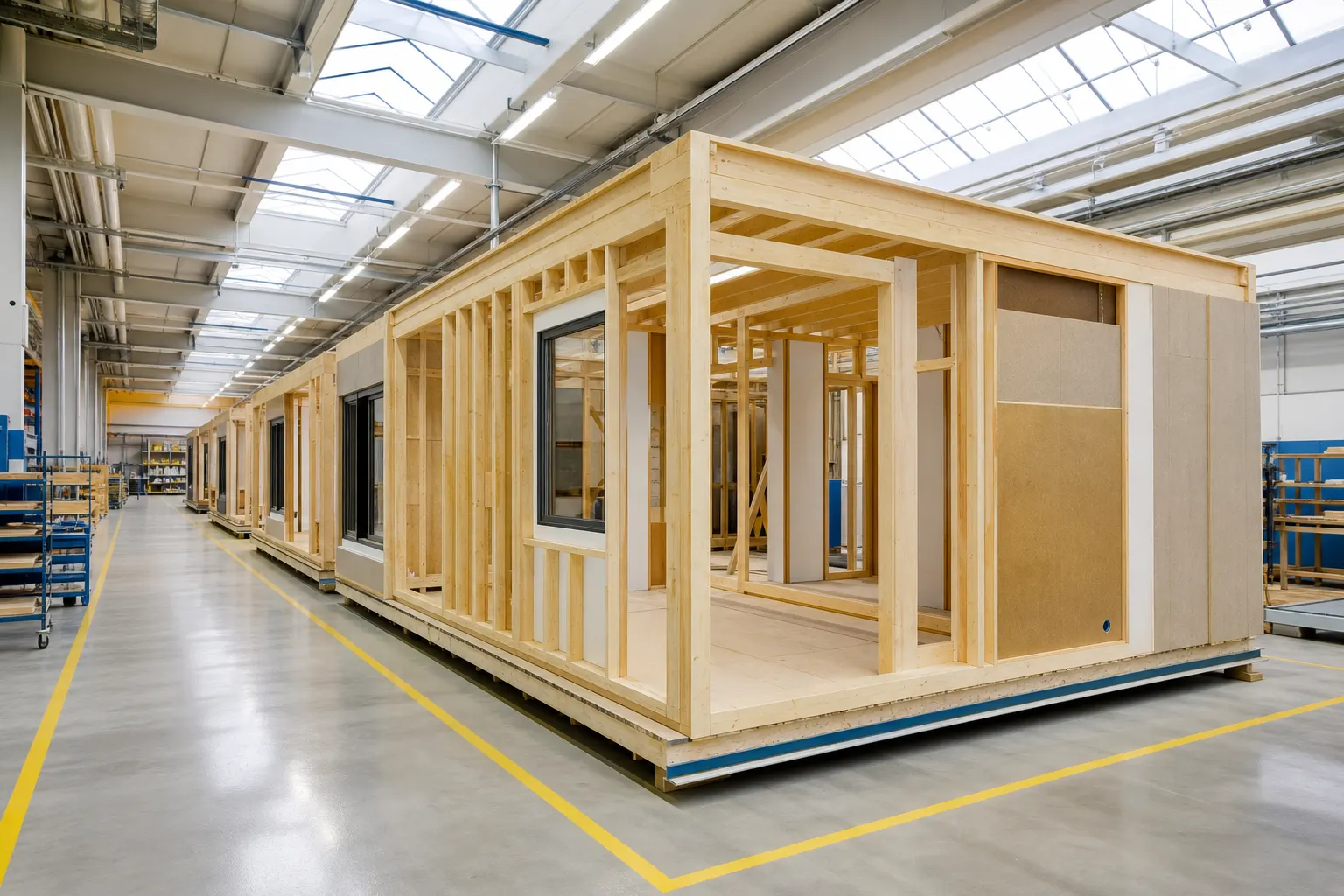
Modular construction is often described as a product, but it is more useful to see it as a delivery strategy. Parts of the building are resolved and made off site, then transported and connected on prepared foundations.
More decisions move earlier
Factory work rewards clarity. Open questions about structure, services, openings and finishes become expensive when they arrive after fabrication starts. Design sign-off therefore matters earlier than in a loosely sequenced site build.
The site remains specific
Ground, access, lifting, drainage, utilities, planning and climate are not standard modules. They require local information and qualified advice, even when the building volumes are repeatable.
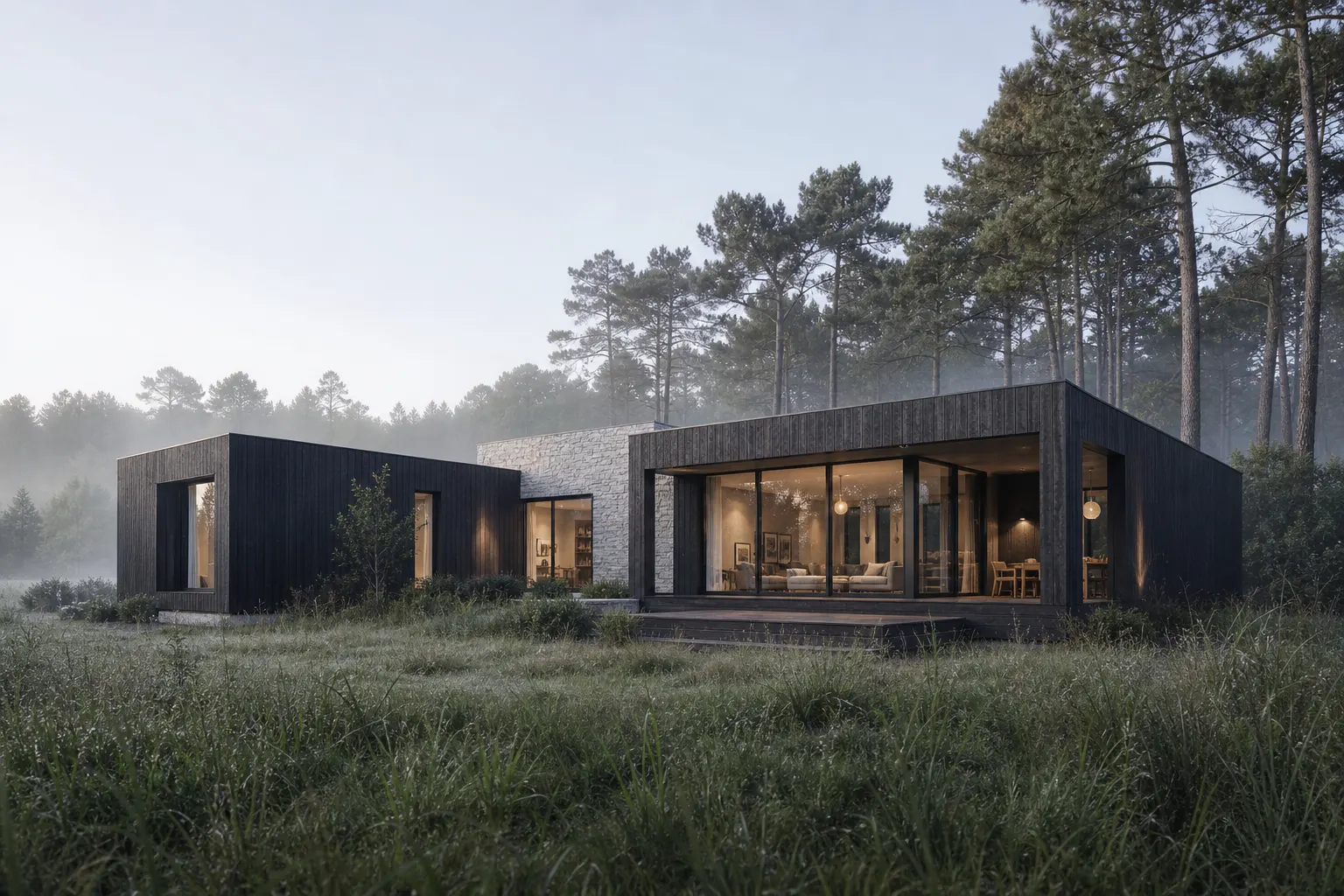
Coordination is the real advantage
The strongest opportunity is not speed as a slogan. It is the ability to coordinate repeatable details, inspect work in a controlled setting and align site preparation with manufacturing — when the project team is organised around that method.