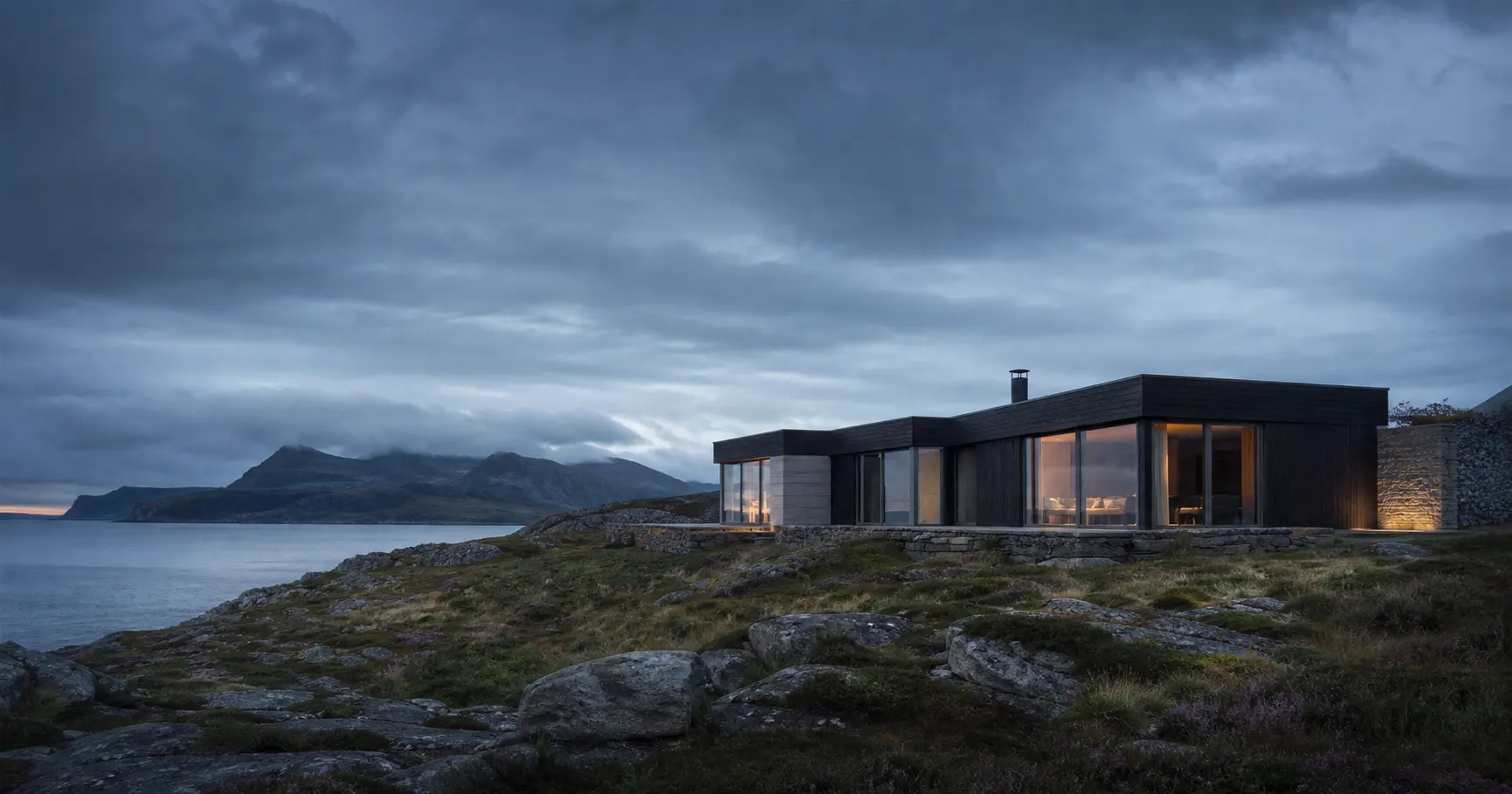
A modular system begins with repeatable logic, but a good home cannot end there. The same volume can feel exposed, grounded, private or expansive depending on where it sits and which edge it opens.
Start with forces, not features
Before choosing a façade or room finish, map the useful facts: access, weather, solar path, views worth holding and areas that need protection. These forces give each module a reason to turn, extend or close.
Use thresholds to moderate the outside
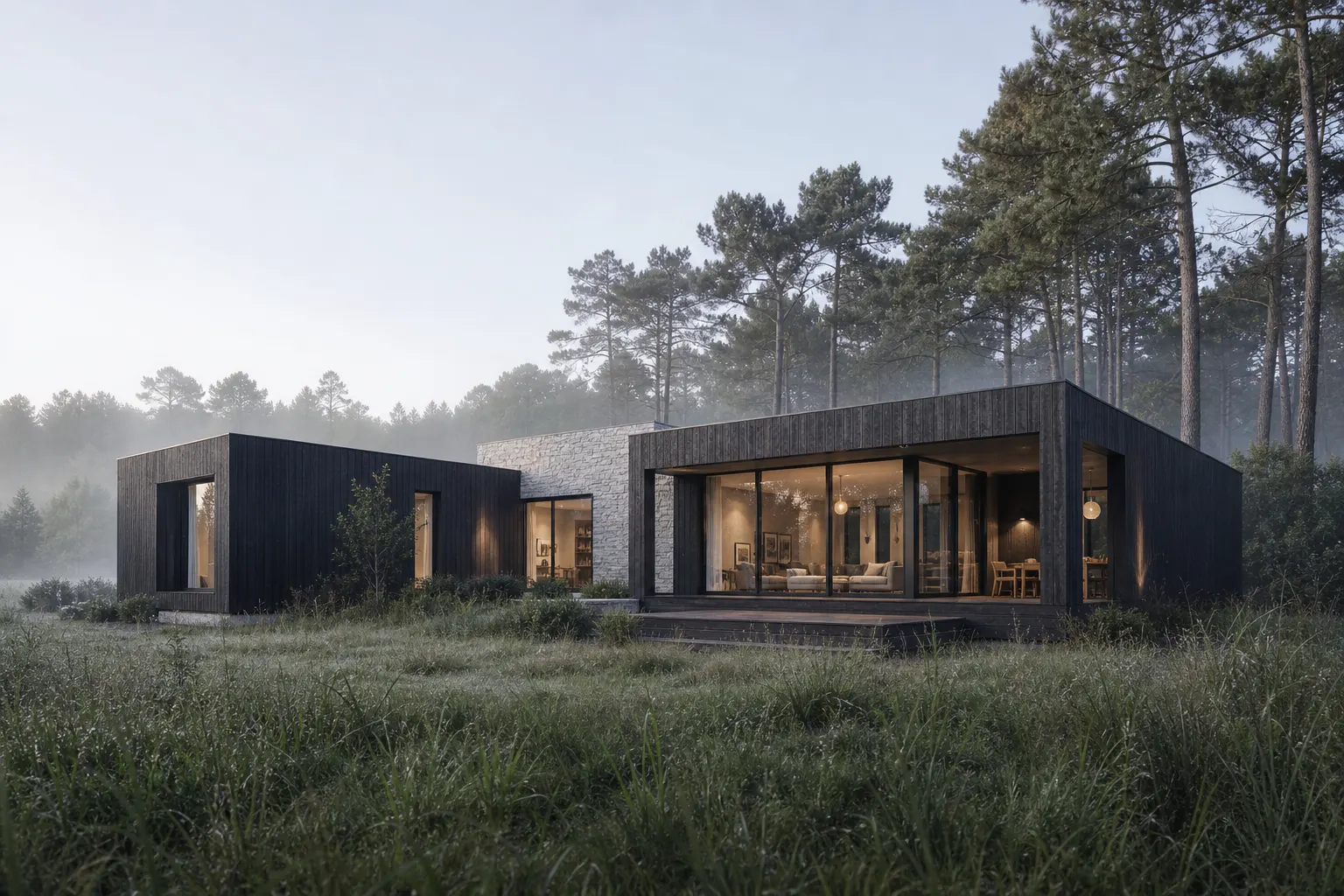
A deep terrace, recessed entry or courtyard does more than make an attractive photograph. It gives wet clothing somewhere to stop, softens glare, creates shade and makes being outdoors possible in more conditions.
Frame less, more carefully
Glass is most effective when it has a specific job. A controlled opening towards a tree line or distant ridge can create a stronger relationship to place than an entirely transparent wall with no privacy or thermal strategy.
The ORBITA models are fictional, but the principle is real: let the site change the architecture early enough that it matters.